
Maintaining Pedagogical Integrity During a Pandemic
Be the Teacher You Are

Glenn Geher, PhD
State University of New York at New Paltz*
Maintaining Pedagogical Integrity During a Pandemic: Be the Teacher You Are
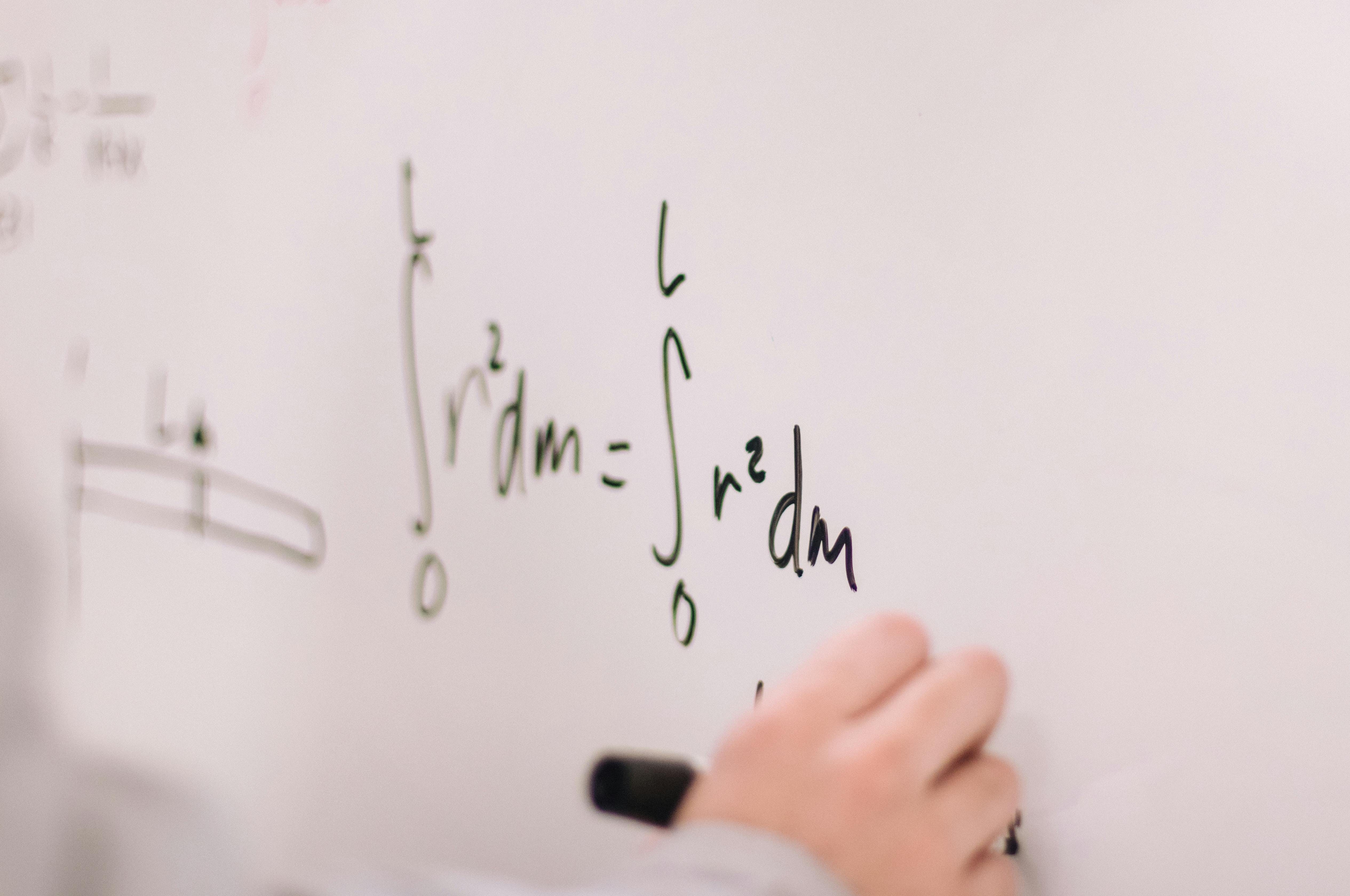
(Photo Credit: Jeswin Thomas: Pexels)
Each and every industry has been affected by the coronavirus pandemic. As I type, I want you to know that I am a survivor of a serious bout of COVID-19. As a faculty member in the Psychology Department (and Founding Director of Evolutionary Studies) at the State University of New York at New Paltz, I found myself surrounded by hundreds of people from all over New York state during the week of March 9-13, 2020. I hosted a speaker for our evolutionary studies program on Monday, March 9. The topic was parasitism and disease (the speaker was evolutionary biologist, Lydia Bright). More than 100 people from all over our community were in attendance.
That week I taught two sections of my statistics classes (each on two occasions). These sections had 30 students, one of whom, who sat in the front row, tested positive for Corona soon thereafter. Her entire family was afflicted, in fact, as I would come later to find out.
That week, I also attended a large event at the library on campus that celebrated recent books published by our faculty. I must have bumped into 100 people at that event.
In light of the coronavirus emergency, our university decreed that spring break, which had been set for March 16-20, was extended to include the following week (through March 29). Further, it was decreed that all classes would be offered, for the remainder of the semester, via online delivery.
Note that I have taught courses online going back to 1999. I had taught several different classes using online delivery and was not too phased by this change. I figured I’d just deal with it and figure it out.
My fever hit me on Monday, March 16. By the evening of March 17, with the fever worsening, it was pretty obvious to me that I could be afflicted with COVID-19. As it turns out, I was so afflicted (I tested positive a few weeks later, when testing became available in our county). I was bed-bound for 14 straight days with fever, chills, and fatigue that seemed like they were never going away.
Fortunately, the duration of my illness overlapped fully with the duration of our now-elongated Spring Break. I didn’t miss a single teaching moment due to COVID-19, in fact. And I am grateful for this.
Many of our students at SUNY New Paltz come from New York City and the surrounding areas. Not surprisingly, many of our students (along with their family members) were affected by the virus. Several students of mine lost family members during the pandemic. It was truly just horrific.
While many aspects of my life needed attention (such as the fact that my daughter showed symptoms of COVID-19 along with me), teaching my classes, of course, was a very high priority.
While, as mentioned prior, I had taught various courses online over the years, this felt different. Specifically, the idea of teaching Statistics in an online format seemed, to put it simply, rather sketchy. Our department had never offered Statistics in an online format. The several statistics instructors in our department had, independently, decided that the content of this course was simply too intensive and technical to make for a reasonable online course.
So there I was, stricken with the very disease that was causing all of this tumult on a global scale, needing to figure out how to best teach 50% of my Statistics course in a fully online environment.
At the end of the day, while it took a ton of work and energy on my part (at a time when I was experiencing intensive post-COVID fatigue), the course was extremely successful. Not only did students rise to the challenge and demonstrate a strong understanding of the content (in general), but student evaluations of instruction were full of comments speaking to the efficacy of the online delivery. And several students reported feeling grateful for the efforts that I put into the course. Herein, I describe, in both general and specific terms, the strategies that I used to teach this challenging course in a suddenly online format.
Identify Your Inner Teacher
As is true in all areas of human functioning, great teaching comes in a variety forms. Some teachers focus on the delivery of content, while others focus on facilitating student emotional growth. And still others focus on cultivating a strong sense of social justice in each of their students (see Planke et al., 2018). Some teachers are at their best teaching technical information in a large lecture hall, while others shine most when advising students individually during office hours.
If you’re faced with a situation in which you have to teach outside of the box (e.g., suddenly having to change your course to all online delivery), I suggest that you focus first on your own particular strengths and values as a teacher. Ask yourself this: Who is your inner teacher? What are your particular strengths and values as a teacher? And, from there, figure out a way to underscore these strengths in your method of online teaching.
For me, I consider a core strength to be direct communication with students, particularly in a classroom setting. Early in my college teaching career (going back to the University of New Hampshire in 1994), I decided to downplay technology. I don’t use slides. I don’t use PowerPoint. I don’t turn off the lights and show videos on the screen. A core strength of my approach to teaching has always been the old-school chalk-on-the-board method. I make a point to learn all of my students’ names and to work to communicate directly with students as if on an individual level at all times.
Further, I don’t ever want a single student to get lost in the mix. If one student doesn’t understand one bit of the information that is being presented, I will stop my lecture in its tracks to rectify the situation. I have always believed that if one student doesn’t understand something, then it is probably the case that 10 students also don’t understand that same idea. So I lecture relatively slowly, regularly gauging student understanding. And this approach, that characterizes my classes in general, is particularly crucial in my offering of Statistics. So you can imagine how resourceful I needed to be to convert this particular class into an all-online format!
Maintaining the fundamentals of my approach to teaching Statistics (which I first taught in 1996) was foundational in my thinking of how to convert this class for all-online delivery.
The primary element in my strategizing would be this: High-quality videos of me presenting the content of the chapters, on a white board, slowly and clearly. And exactly as I would present the information in actual lectures. Hell or high water, my students were going to get exactly the intensive, detailed, carefully worded, passionate lectures that both they and I had signed up for.
Further, while half the course was already behind us, I decided to make video lectures available for all the content of the course (including the chapters that we’d already gone over). Here, I was being proactive. Who knows when the teaching landscape in higher education is going to change? Who knows if I’ll have to teach this course in an all-online format in the future? Further, I concluded that simply having this content available would allow me to share my take on Statistics (which I have summarized in the textbook that I use for the course, Straightforward Statistics: Understanding the Tools of Research (Geher & Hall, 2014)) for a broad, public audience.
I knew that creating these video modules would take a lot of work. I was betting on a strong payout. In short, my hope was that this work would pay off in students truly learning the information as well as they would if they were taking the class in-person.
As is true of many campuses, our university has lecture-capture technology available in many of the classrooms. In my experience, this technology is lacking in many ways, especially when you need to use this technology solo. We have all seen boring lectures where the speaker can barely be seen and the information on the board is similarly hardly legible.
When a student is learning during a seated class, that student is engaged. Their eyes toggle between the teacher and the content on the board regularly. Lecture-capture technology does not capture this critical dynamic in the teaching/learning process. I thought very briefly about using our campus’ lecture-capture technology and concluded that it simply would not do.
As luck would have it, a family friend, Dayna Thomas, had expressed that she was looking for some work. At the time, she was a journalism major carrying a 4.0 GPA. And she had outstanding videography skills. I concluded that hiring her to record me lecturing on the 12 chapters covered in the book would be exactly what was needed.
As a high-caliber college student herself, she would naturally record my lectures from the perspective of a college student taking notes. Further, as an engaged student, she would provide non-verbale feedback as to whether the content I was providing was clear and sufficiently thorough. And I knew I could count on her to zoom in on key terms on the board at appropriate times so as to mimic how a serious student would approach learning as if actually in the classroom. This is exactly what I needed.
I will say, from a practical standpoint, I paid her $10 for each session from my own pocket. While this is a relatively small cost, in light of the current pandemic and the potentially growing need for online course conversion, I would suggest that university administrations develop ways to systemically support this kind of work. I know that this strategy was, without question, the key to allowing for the success of my online Statistics classes during the 2020 corona crisis.
As something of a sidebar, note that each summer, I typically teach a course called Evolution and the Human Condition in China at Chongqing University of Education. In summer of 2020, of course, I was not able to fly to China to teach this course. So I offered the course in an online format. This same basic algorithm, of providing students with videos of me (recorded from the perspective of an actual college student (my daughter Megan ), was used and was met with much success in terms of student learning outcomes as well as student feedback about the course.
In terms of class time, I essentially used the “flipped classroom” approach. Students were expected to have watched the lectures via video and then they could ask questions during the actual class time (or during office hours). Questions were extremely well-thought-out and all students seemed to be on the same page, leading to high-level discussions that stood atop the base of knowledge that students acquired from the videos.
Further, note that for both my Statistics and Evolution and the Human Condition classes, I put the videos on YouTube and made them freely available for public consumption (links are found in the references). This fact matches my philosophy of education which is that it should be free and accessible to all. And I will say that I have received feedback from people aside from the students in these classes thanking me for these products.
A suggestion that I have for university administrators, based on my experiences with this approach to online teaching, is this: Administrators would be wise to develop systemic processes to support faculty to develop high-quality videos of their lectures that are taken either by actual college students or by individuals who clearly can take a college student perspective. Perhaps departments could support, for instance, advanced students by providing independent study credit for helping an instructor develop such materials. Or perhaps funds could be made available for such work. As indicated above, given the on-the-fly nature of the current situation, I went rogue and ate the costs of producing these videos myself. This said, given my experiences in this area, I would strongly encourage universities to consider ways to systemically and formally support the creation of such products in the name of effective, student-focused pedagogy.
Caution Regarding Technology
As my career has developed, I find myself more and more skeptical of technology as a primary tool in education. A few ago when I was department chair, I was asked by a junior faculty member to sit in on and review his class. It was a class on highly technical information. And it took place at 8:00am.
The first thing that the instructor did was this: He turned off the lights. He then turned on the computer and gave 75 minutes of PowerPoint presentations that I would later learn were provided to the instructor by the publisher of the textbook. I was bored out of my mind. And several students were, rightfully, sleeping.
Injecting yourself into your teaching is, to my mind, what makes higher education exciting. Bringing your passions that led you to want to be a professional scholar on some particular topic into every single element of your teaching is what brings the material alive and inspires students to want to join you in the educational journey that you are leading. Showing students PowerPoints in the dark as a primary MO is, simply, lacking in the luster that surrounds the greatest of teachers. These days, too many teachers are over-reliant on technology.
With online teaching, the temptation to rely on technology is exacerbated. BlackBoard and all its counterparts have more bells and whistles than a brand new BMW. The options available with these software packages are truly dizzying. Sure, I use BlackBoard for some things in my courses. And in an all-online class, it is kind of hard to avoid. But my suggestion regarding technology and education is pretty simple. Remember that technology is a tool for education. It is not an end in and of itself. Textbook publishers and college administrators often seem a little too excited to get faculty to master new online learning processes and systems.
Here are some basic pieces of advice on the use of technology in the teaching process:
Technology, at some point or another, will fail.
PowerPoint slides are not match for passionate, clear lectures.
Students can watch YouTube videos and TED talks on their own without having to pay tuition.
Most generally, technology often has the capacity to take the professor’s uniqueness out of the equation.
If you’re a college professor, then you got into this profession for a reason. You are passionate about your area of scholarship and your are equally passionate about bringing the excitement that you have for this area to the bright young minds that will lead in the future. Keep yourself in the equation, and don’t forget why you are in this profession in the first place.
(And while the bulk of this article was written before AI slammed itself onto the scene, you can easily see how this same guidance bears on how teachers can deal with the many pedagogical issues brought upon us by the juggernaut that is AI)
Assessment Strategies and Maintaining Personal Connections with Students
When I was faced with the thought of assessing student knowledge for Statistics in an all-online format, I have to say that I had some pause. Usually, in a seated-classroom context, I give students a paper exam with about 15 questions that vary in format. I watch them take the exam. And I write this on the board: You cheat, you die! Of course, this threat is largely in jest. But the point is that you can control academic dishonesty much more in-person than in an online format.
I had to change my assessment processes. I developed an assessment process that, while time-consuming, ended up providing an effective way to assess student learning as well as an effective way to maintain personal connections with students during a difficult time.
I created a system for giving oral exams via ZOOM. In doing this, for each exam, I developed a list of about 10 potential questions. I asked each student, by a random procedure, four of these questions during 15-minute slots. I developed a grading algorithm and recorded each session in case any equivocation over grades emerged. No student complained about any grades.
These ZOOM sessions provided not only an opportunity to look students in the eyes and truly assess their knowledge of the content, but they also provided an opportunity to check in with each student individually on multiple occasions before the end of the semester. I asked students how they were doing with the pandemic, how their families were doing, etc. I have to say, it was a nice opportunity to stay connected with our students during a difficult time.
Since the semester ended, I’ve stayed in touch with many of these students and have served as a reference for several for jobs and graduate-program applications. Being able to stay connected to my students in spite of the online nature of the course delivery was critical for me and I’m glad to say that the system I implemented helped to maintain this important (and human) part of the teaching process.
Bottom Line
Effective teaching requires resourcefulness and flexibility. You never know exactly how things are going to go or what new obstacles might present themselves during any given semester.
The corona pandemic of 2020 served as perhaps the most challenging hurdle that the field of higher education has seen in our lifetime. The forced conversion of classes of all kinds, from all fields, at all levels, into an online format, was simply unprecedented.
Further, when it comes to online teaching, a broad array of possibilities exist. Decisions need to be made regarding synchronous versus asynchronous teaching. Processes regarding office hours needed to be figured out. Platforms for communicating with students needed to be determined. Mechanisms for delivering content needed to be figured out. And more.
On top of all this, these decisions needed to be made quickly. And several of us, myself included, actually had to make these decisions while actually being afflicted with COVID-19 at the same time, not knowing if we would actually live to see our courses to completion.
Based on my experiences of teaching seated and online classes for decades, I would guide teachers who are forced to quickly develop their classes into online classes to, above anything else, make sure to not let their inner teacher get lost in the mix. Find ways to bring your own identity as a teacher, including all your strengths and values, along for the ride as you develop and implement the online version of your class. You and your students will both benefit as a result.
References
Geher, G., & Hall, S. (2014). Straightforward Statistics: Understanding the Tools of Research. New York: Oxford University Press.
*Note: This article was written for an edited academic book regarding issues connected to teaching during the pandemic. For various reasons, the project was rescinded—thus, I am publishing it here!